

Manual link building services are human-led outreach and partnership efforts that earn editorial backlinks from relevant, authoritative websites. Unlike automated or bulk link schemes, manual outreach is personalized, relationship-based, and focused on relevance and value. High-quality manual links still correlate strongly with ranking improvements and long-term visibility when done correctly.
How Google’s E-E-A-T and spam policies shape link building today
E-E-A-T (Experience, Expertise, Authoritativeness, Trustworthiness)
Google’s guidance stresses content that demonstrates real experience, clear expertise, and trust signals across your site and author profiles. Links earned from reputable industry sources help demonstrate authoritativeness and trustworthiness — but only when those links are editorial, relevant, and transparent. Showing credentials, case studies, and author bios improves E-E-A-T alongside strong backlinks.
Google spam updates and manual actions — what to avoid
Google’s spam policies and recent spam updates (including large spam sweeps rolled out in 2025) target manipulative link schemes, cloaking, and low-quality networks. Participating in buying links or artificial link exchanges can trigger manual actions or ranking drops. Manual link-building services must therefore avoid any practices that resemble link schemes and focus on editorially earned links. Always audit link sources for relevance and authenticity.
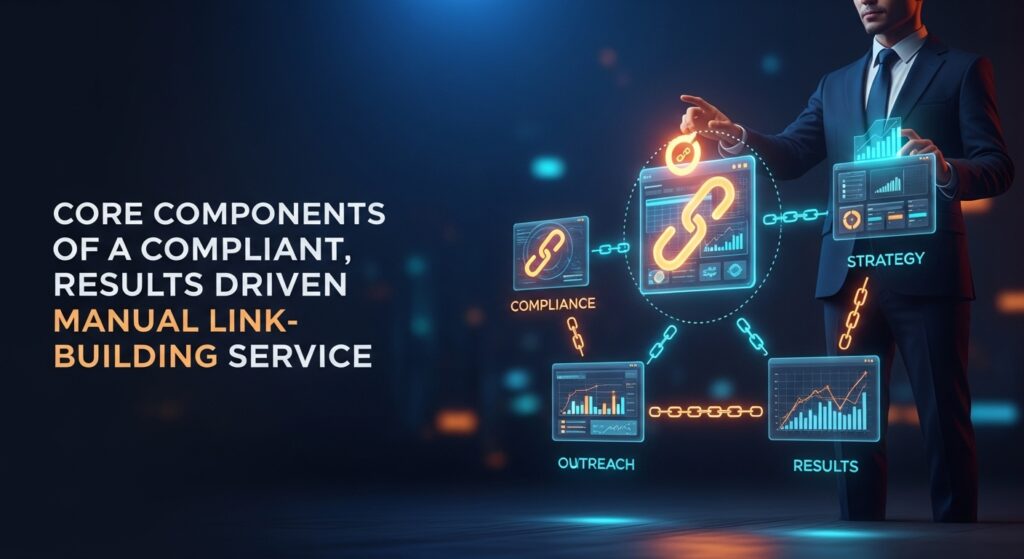
Core components of a compliant, results-driven manual link-building service
1) Strategic prospecting and relevance mapping
Start by mapping topical relevance: target sites that share your industry, audience, and topical clusters. Prioritize editorial sites, niche blogs, resource pages, and authoritative publications — not random directories or PBNs (private blog networks). Use manual vetting to confirm traffic signals, topical fit, and editorial integrity.
2) High-value content and linkable assets
Create assets that deserve to be linked: research reports, how-to guides, interactive tools, case studies, and original data. Manual outreach is far more successful when you offer content that provides clear benefit to the host site’s readers.
3) Personalized outreach & relationship building
Templates don’t cut it. The outreach should show familiarity with the target site, suggest a specific content placement or improvement (e.g., replace a broken link, add value to a resource page), and present the link in a mutually beneficial way. Relationship building can convert a one-off link into long-term partnerships.
4) Quality control and risk mitigation
Manual services should screen prospects for signs of link farms, irrelevant anchors, and paid link disclosures. They should also maintain documented outreach records and avoid reciprocal link swaps or link buying. Regularly review links for relevancy and clean up any dubious placements quickly to protect site trust.
Tactical approaches that a professional manual link-building service should offer
Guest posting with editorial standards
Not “spammy guest posts” — but thoughtful, original contributions to reputable blogs in your niche with natural, contextual links and author bios that demonstrate expertise.
Broken link reclamation
Find broken links on resource pages and offer your content as a replacement. This tactic is high-value, scalable, and naturally editorial.
Resource & roundup placements
Pitch resource compilations, expert roundups, and listicles where your client’s asset genuinely belongs.
Digital PR and data journalism
Use original research or local data to attract press coverage and editorial cites from news outlets and industry media.

Measuring success — KPIs for manual link building services
Primary KPIs
- Number of genuinely editorial backlinks from relevant domains (do not count low-value directories).
- Domain Authority/Authority Score lift for target pages (as a direction, not an absolute).
- Referral traffic from placement pages (real users matter).
- Rankings improvement for target keywords.
Secondary KPIs
- Brand mentions and social amplification.
- Long-term retention of links (links that stay live after 6–12 months indicate quality).
- Conversion lift from referral traffic.
Use a blend of Search Console, Analytics, and a professional link tracker to verify the link’s origin and impact.
Pricing models & what to expect from an ethical service
Typical pricing structures
- Per-link (for high-quality, editorial placements).
- Monthly retainer (for ongoing outreach and content creation).
- Project-based (for one-time campaigns like digital PR).
Beware of extremely cheap “per link” offers that sound too good to be true — they often involve low-quality placements or automated networks. Quality manual outreach is time-intensive and priced accordingly.
Quick checklist to vet a manual link-building provider (use before hiring)
- Do they showcase studies with verifiable links and referral traffic?
- Do they perform manual prospect vetting (not automated lists)?
- Are their outreach emails personalized and transparent?
- Do they avoid paid link networks and reciprocal link schemes?
- Will they provide regular reporting with screenshots / Search Console evidence?
- Do they align with Google’s spam policy and E-E-A-T guidance?
Final recommendations — how to get started safely
- Start with a link audit to remove or disavow toxic links.
- Build a prioritized asset list (research, guides, case studies) that deserves links.
- Run a pilot outreach campaign focused on 10–20 high-value prospects. Measure referral traffic and link retention.
- Scale only with strict quality controls and transparent reporting.
Manual link-building services are a long-term investment in authority. When executed with E-E-A-T in mind and full compliance with Google’s spam policies, they deliver sustainable SEO value and real referral traffic.